If you’ve ever had a red-eye flight, a long layover, or an early 4 a.m. departure, you might have asked yourself: “Can I sleep at the airport?” In the UK, the answer is usually yes, but not all airports make it easy.
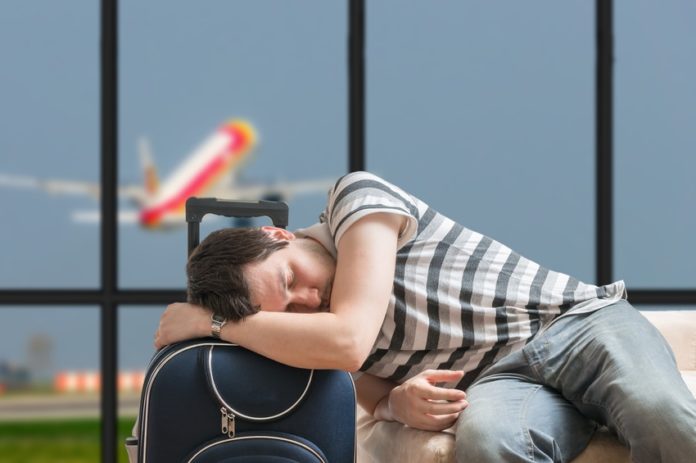
Some airports are open 24/7 and quietly let travellers stretch out on benches. Others close parts of the terminal at night. Bright lights, loud announcements, and chairs with armrests can make sleeping tricky. A few airports have day rooms, lounges, or sleeping pods, but most require a bit of creativity, and maybe an eye mask.
“The good news is that sleeping in UK airports is generally legal. Most major airports operate 24/7, which means you won’t usually be asked to leave if you’re stuck overnight.”
This guide will help you know what to expect.
For more airport advice, visit our guide to the Best Airports for Shopping and Entertainment, or 10 Tips to Save Money at the Airport.
1. UK Airport Sleeping Policies (General Overview)
The good news is that sleeping in UK airports is generally legal. Most major airports operate 24/7, which means you won’t usually be asked to leave if you’re stuck overnight. That said, there are a few important caveats:
- Airside vs. Landside: Security checkpoints often close for a few hours overnight. This means you may have to sleep landside (before security) until the checkpoints reopen in the early morning.
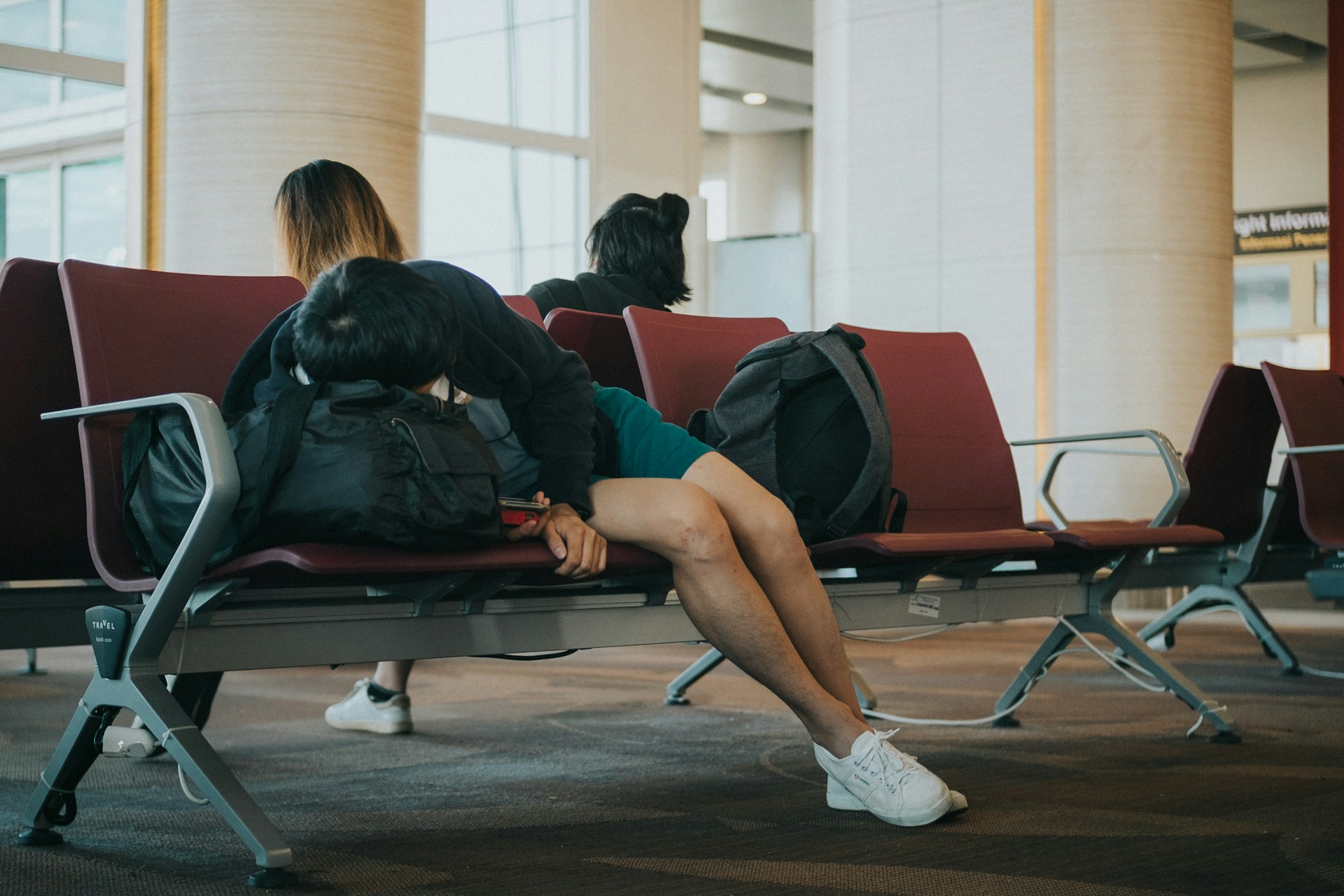
- Comfort Levels Vary: Seating is inconsistent. Some airports offer padded benches, while others have only hard chairs with armrests that make lying down impossible. Many passengers resort to the floor.
- Facilities Are Limited: Dedicated “quiet zones” for sleeping are rare. Lounges are more common, but they’re not always designed with overnight rest in mind. Sleeping pods are uncommon, with Gatwick being the only real exception.
- Security Checks: Don’t be surprised if staff or security approach you while you rest. They may ask for proof of your flight, but most are used to seeing overnight passengers.
In short: yes, you can sleep in UK airports, but don’t expect luxury. Think of it as a backup option when hotels or lounges aren’t viable.
2. Airport-by-Airport Guide
| Airport | Is it Legal | Open 24/7 | Sleeping Pods | Day Rooms or Lounges | Quiet Zones |
|---|---|---|---|---|---|
| Birmingham Airport | Yes | Yes | No | Yes | No |
| Bristol Airport | Yes | Yes | No | Yes | No |
| Edinburgh Airport | Yes | Yes | No | Yes | No |
| Gatwick Airport | Yes | Yes | Yes (YotelAir Gatwick) | Yes | No |
| Glasgow Airport | Yes | Yes | No | Yes | No |
| Glasgow Prestwick | Yes | Yes | No | Yes | No |
| Heathrow Airport | Yes | Yes | Yes | Yes (Club Aspire T3) | Yes (T2 Quiet Zone) |
| Liverpool Airport | Yes | Yes | No | Yes | No |
| Luton Airport | Yes | Yes | Yes | Yes | Yes (Passengers with Disabilities) |
| Manchester Airport | Yes | Yes | No | Yes | Yes (T3 Quiet Zone) |
| Stansted Airport | Yes | Yes | No | Yes | No |
Key Takeaways: Sleeping in UK airports is usually allowed, but comfort is limited. Only Gatwick and Heathrow offer sleeping pods, while most other airports have lounges, floor space, or nearby hotels.
Birmingham Airport (BHX)
- ✅ Sleeping allowed, airport open 24/7.
- ❌ No sleeping pods.
- ✅ Lounges available, but none with real sleep facilities.
- ⚠️ Seating has armrests, so comfort is limited. Floor sleeping is common for overnight passengers.
Bristol Airport (BRS)
- ✅ Sleeping permitted, open around the clock.
- ❌ No pods or quiet zones.
- ✅ Lounges exist, but not sleep-focused.
- ⚠️ Space fills up quickly due to the airport’s small size. Arrive early if you need to camp overnight.
Edinburgh Airport (EDI)
- ✅ Overnight stays permitted, 24/7 operations.
- ❌ No pods.
- ✅ Lounges available (but not sleep-equipped).
- ⚠️ A busy hub that stays noisy even at night. Earplugs are essential.
Gatwick Airport (LGW)
- ⭐ The most sleep-friendly airport in the UK.
- ✅ Open 24/7, sleeping allowed.
- ✅ Sleeping pods in the South Terminal (YOTELAIR, bookable by the hour)
- ✅ Lounges and day rooms available.
- ⚠️ Plenty of seating, including some softer benches, but it fills up quickly with budget travellers.
Glasgow Airport (GLA)
- ✅ Sleeping allowed, airport open 24/7.
- ❌ No pods or quiet zones.
- ✅ Lounges available, but not suitable for proper rest.
- ⚠️ Landside seating is limited. Many travellers end up on the floor.
Heathrow Airport (LHR)
- ✅ Airport operates 24/7, though some airside areas close at night. Expect to sleep landside until security reopens.
- ✅ Sleeping pods in Terminal 4 (bookable by the hour).
- ✅ Wide choice of lounges and nearby airport hotels/day rooms.
- ⚠️ Seating is limited and often fitted with armrests. Bright lights, cleaning, and announcements make it less sleep-friendly than Gatwick.
Stansted Airport (STN)
- ✅ Sleeping permitted, airport open 24/7.
- ❌ No sleeping pods or quiet zones.
- ✅ Lounges available, but not sleep-focused.
- ⚠️ Bright, noisy environment with frequent announcements. Bring earplugs and get there early to claim a spot.
Liverpool John Lennon Airport (LPL)
- ✅ Sleeping allowed, airport open 24/7.
- ❌ No pods or quiet zones.
- ✅ Lounges exist but not sleep-oriented.
- ⚠️ Smaller terminal, so seating fills quickly.
Luton Airport (LTN)
- ✅ Sleeping allowed, operates 24/7.
- ❌ No pods.
- ✅ Lounges available, though not designed for sleeping.
- ⚠️ Popular with budget airlines. Space is limited, and announcements keep it noisy.
Manchester Airport (MAN)
- ✅ Sleeping technically allowed, open 24/7.
- ❌ No pods or designated quiet zones.
- ✅ Lounges and nearby hotels available.
- ⚠️ Busy, and seating has armrests, making sleep uncomfortable. Security staff may check on overnight sleepers.
3. Tips for Sleeping in UK Airports
Sleeping in an airport isn’t glamorous, but with a bit of planning, it can be manageable. First, check which areas of the terminal are open overnight. Security checkpoints may close, meaning you might need to stay landside until they reopen.
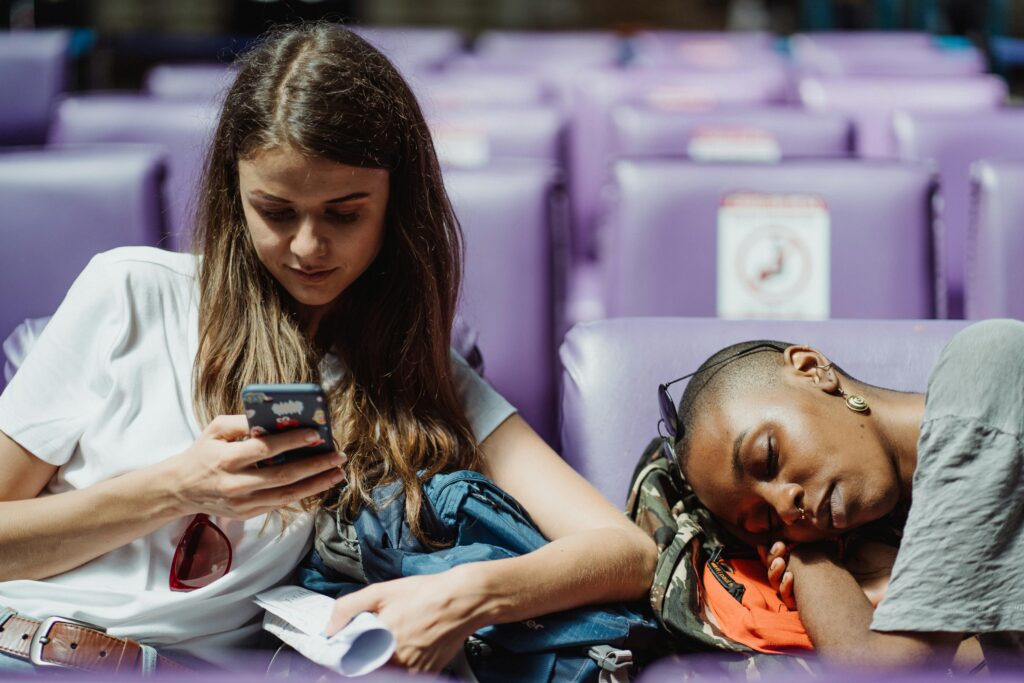
Bring a few essentials. Earplugs and eye masks can block out light and noise. A travel blanket or scarf adds warmth, and a neck pillow makes hard benches more comfortable. A power bank keeps your devices charged through the night.
Pick a safe spot. Stay near other travellers or security cameras, and keep your belongings close. Tuck valuables under your head or use a lockable bag to stay secure while you rest.
Timing matters, so arrive early to claim a good spot. Overnight travellers can fill popular airports fast. With these tips, even a long layover or early-morning departure can feel a little more manageable.
4. Alternatives to Airport Sleeping
Sometimes, the airport just isn’t made for sleep. In those cases, a few alternatives can make your overnight stay much more comfortable. Capsule hotels, like YOTELAIR at Gatwick and Heathrow, offer private, compact rooms where you can truly lie down and rest.
Airport lounges are another option. Many offer day passes and quiet spaces, snacks, and comfy seating, perfect for a few hours of shut-eye. If you prefer more traditional comfort, airport hotels are often just minutes away, with the added benefit of airport parking.
With these options, you can choose comfort over floor space, ensuring that your journey starts refreshed rather than exhausted.
5. Conclusion
Yes, you can sleep in UK airports, but comfort varies widely. Some, like Gatwick and Stansted, are relatively easy for overnight rest, while larger hubs like Heathrow or Manchester can be busy and crowded, making sleep a challenge.
A little preparation goes a long way. Bring essentials, pick a safe spot, and consider alternatives like capsule hotels, lounges, or nearby budget accommodations. By planning ahead, even an early-morning departure or long layover can be far less stressful, and maybe even restful.
FAQs: Sleeping in UK Airports
Yes, most UK airports allow passengers to sleep overnight. While comfort varies, staying in terminals overnight is generally legal and accepted.
Gatwick and Stansted are considered the most sleep-friendly airports. Gatwick even offers sleeping pods, while most others require using lounges or floor space.
Sleeping pods are rare in the UK. Gatwick and Heathrow have pods that can be booked by the hour. Other airports generally rely on benches or floor space.
Yes. Many airports have lounges that allow day passes. While not always designed for sleeping, they offer quieter spaces, comfy seating, snacks, and power outlets.
Essentials include an eye mask, earplugs or headphones, a travel blanket or scarf, a neck pillow, and a power bank. These help block light, noise, and discomfort.
Sleeping landside (before security) is often easier overnight, especially when airside areas close. Always pick spots near other travellers or security cameras and keep your belongings secure.
Yes. Options include capsule hotels, airport day rooms, nearby budget hotels, or lounges with day passes. Even a short stay can improve sleep quality.
Occasionally, staff or security may check on passengers sleeping overnight. They may ask for flight details, but most are used to travellers resting in terminals.
Main image: Joyce Romero – Unsplash